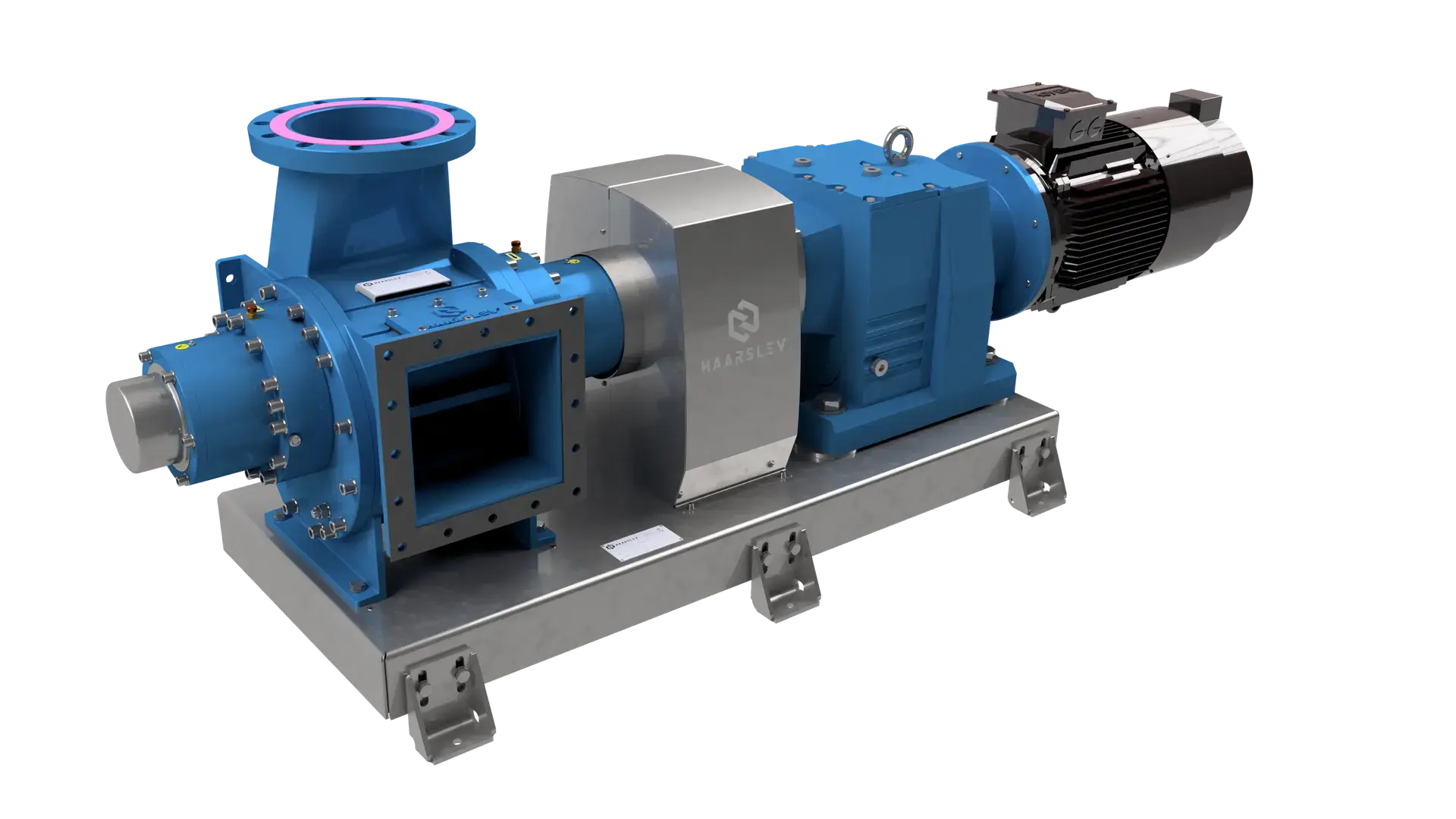
Eco Lamella Pump
The Haarslev Eco Lamella Pump transfers viscous, high-solids by-products through closed pipelines with exceptional hygiene, low energy use and superior reliability. A patented low-friction rotor, direct-drive shaft and wear-resistant parts ensure long service life and stable performance, even with coarse material. Ideal for feeding cookers, coagulation systems and downstream processes over distances up to 200 metres, it delivers smooth, enclosed material handling with minimal maintenance and significantly lower operating costs.
Main uses
- 01
Wet and dry rendering inputs
- 02
Fish and poultry by-products
- 03
Pet food raw material handling
- 04
Feeding cookers and dewatering lines
Built for
performance
- 01Patented rotor and lamella interface cuts friction and wear, reduces energy bills and extends service life.
- 02Direct-drive drivetrain transfers power in a straight line for maximum efficiency and quieter, smoother pumping.
- 03Integrated pipe transition cone accelerates installation, reduces costs and improves connection stability.
- 04Closed-system transfer maintains hygiene, prevents odours and saves space compared to conveyors or open systems.
- 05Handles large particles up to 135 mm and pumps 1.5–250 tons/hour depending on model (HM25, HM35, HM45).
Pump performance control
CORE optimises pump speed, torque and flow to maintain smooth, stable material transfer even with fluctuating viscosity and particle size. This reduces energy consumption, protects the drivetrain, predicts wear on lamellas and rotors and provides alarms before blockages occur. Operators benefit from real-time insights, safer operation and higher uptime across the material handling line.
Swap your pumps!
The Haarslev pump exchange programme enables fast pump refurbishment with upgraded ECO components, including the patented rotor. Customers receive a pre-refurbished unit to swap in, keeping operations running smoothly. This extends service intervals by as much as 30%, reduces downtime, lowers spare-parts use and supports ESG goals through the reuse of key components.