Compact, rugged systems engineered into the space you have.
Onboard meal and oil processing has its own physics. The system has to take up as little space as possible, stand up to salt-laden movement, and stay productive deep into the working life of the vessel. That's what we design for.
Talk to an onboard specialistOver a century at sea. 200+ vessels.
We've been designing, building and installing onboard meal and oil processing equipment for more than a hundred years. In that time, our systems have been deployed on more than 200 vessels — fishing trawlers, supertrawlers, factory ships, and processors that operate where the catch is.
That history is in the engineering — the things that turn out to matter on year five and year fifteen are the same things we keep getting asked about by operators today.
Three constraints the system has to solve at once.
Sized into the space you actually have
Onboard footprints are tight and non-negotiable. Equipment is configured around the deck plan and equipment-space envelope, not the other way around.
Tough enough for the working life of the vessel
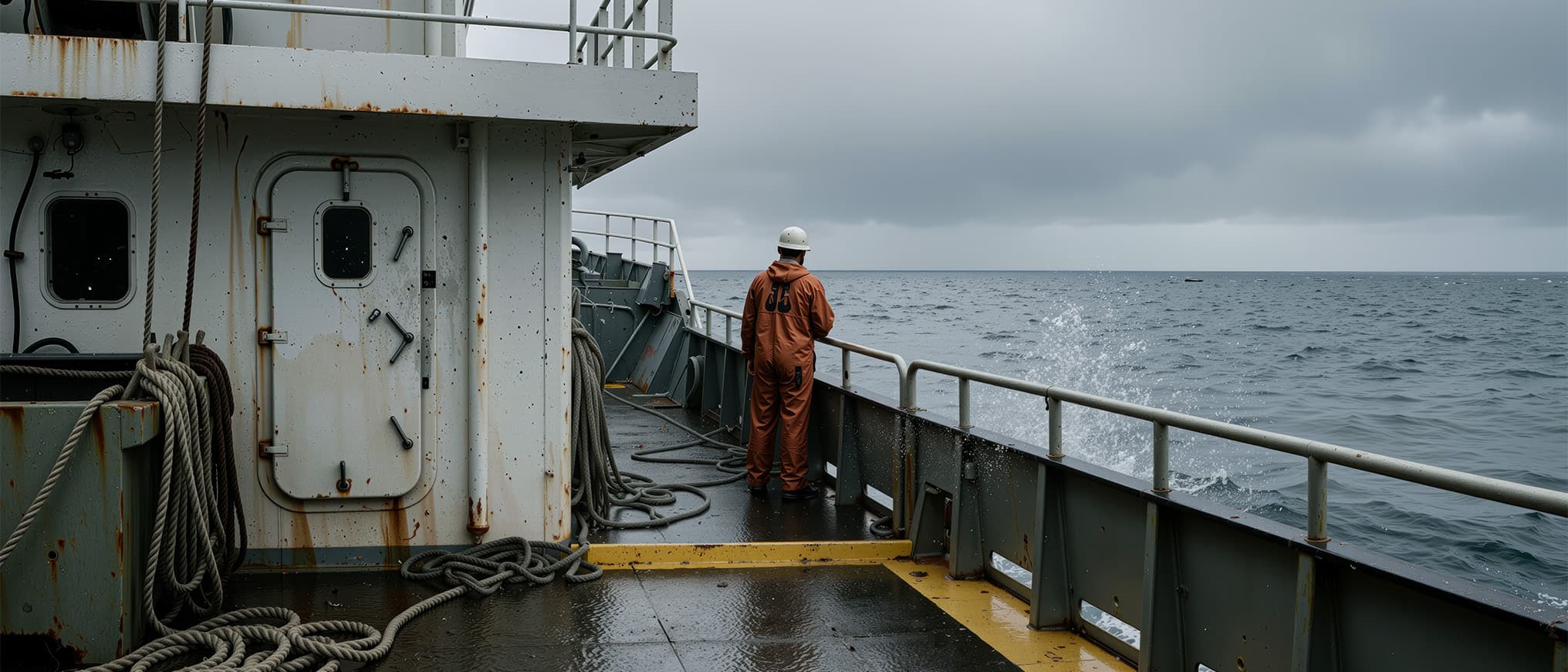
Salt-laden air, constant movement, vibration, infrequent dry-dock access. Components, materials and serviceable-from-deck design choices reflect that.
Integrated with the rest of the ship
Power budget, steam, freshwater, cooling, effluent — the processing line has to behave well as one system in the vessel.
Processing capability that earns its space.
Catch turned into product on the same hull
Process while you fish. Better quality outputs, less spoilage risk, more flexibility on landing and logistics.
Yield and revenue per voyage you can plan around
Consistent meal and oil specs, with the option to step into higher-grade output when the catch and the market support it.
Operating costs that stay predictable
Energy-efficient hardware, parts you can stock, and a service relationship designed for vessels that are rarely in one place for long.
Service that works on a vessel's schedule, not ours.
Spare-parts strategy designed around how often you can get to dry dock, remote diagnostics, crew training and on-site engineering during port calls — built for the operating reality of a working ship.
New build or retrofit — let's scope it.
For new builds we work alongside the yard from the design stage so the processing line fits the vessel rather than the other way around. For existing vessels we work to the constraints you have — and tell you honestly where the trade-offs sit.